


Company Profile
Qingdao Root Industrial and Trading Co., Ltd. Was founded in 2008 year, we are committed to provide one-stop custom plastic solution from product design, mold manufacturing, precision machining service and mass production, our molds and products are widely used in Automotive, home appliances, electronics, medical and other industries. We provide secondary processing such as PVD chrome, painting, printing, hot stamping, ultrasonic welding and assembly of plastic parts. Rootsino have our own affiliated factories, occupies an area of more than 3000 square meters; and passed ISO9001 and TS16949 certification, The design team engages in UG, CAD, CAE and CAM design and formulation using computer software programs. They use CAD programs to generate 2D blueprints, UG to made 3D designs, use CAE simulation to identify the optimal fabrication pattern, and then generate CAM computer simulation.
Why Choose Us
Professional Team
Now we have more than 80 employees, 20 of them are experienced engineers in CAD, CAE, CAM skills. Injection department have 28 people.
Advanced Equipment
The existing CNC machine tools, coordinate detection system and various kinds of machine tools are more than 20 units, more than 2000 square meters factory mold.
Company Certificate
In order to better development, our company passed ISO9001 and TS16949 certification.
Rich Experience
With the fast feedback, improved design service, most secure on customer's design, most energy-efficient solution offer, reasonable cost, free mold maintenance when parts injection at our side.

Electric Plating Silver Car Door Handle Mold
Electric plating silver car door handle, in simple terms, is to soften or melt the spray material to a molten state (this is usually achieved by using a heat source), and then use a spray gun to spray it on the surface of car door handle, so that a new protective film is formed on the surface of the car.

Steering Wheel Plastic Injection Mold
Steering Wheel Plastic Injection Mold is a type of mold used to manufacture steering wheel covers for cars or trucks. This mold is used with a plastic injection machine to produce high-quality steering wheel covers that are durable, efficient, and cost-effective.

Auto Light Plastic Injection Mold
Plastic injection molding has become a widely utilized manufacturing process in various industries, including automotive manufacturing.
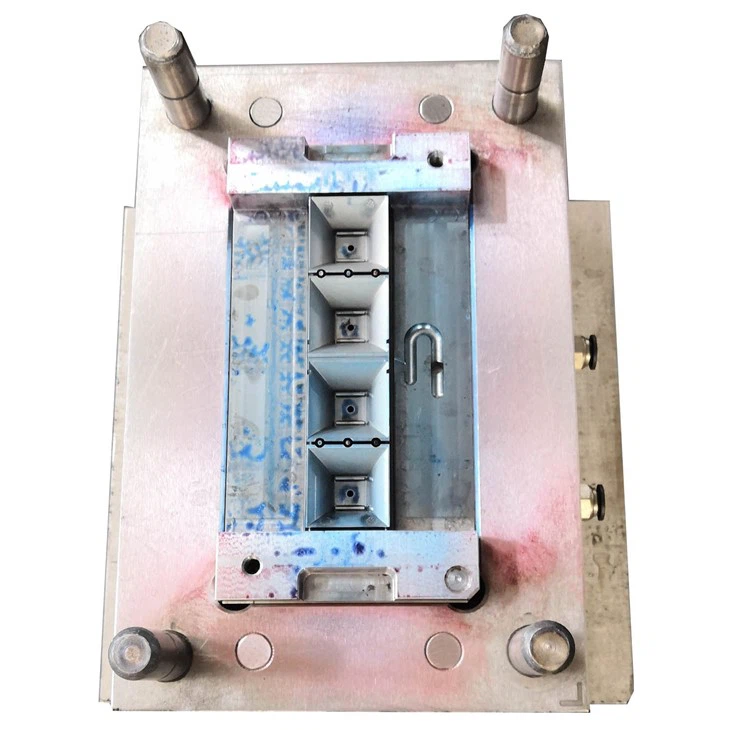
Reflective Mirror Injection Mold With Good Quality
The material commonly chosen for injection mirror molds is high-quality steel, such as P20, H13, or stainless steel, to improve the durability and accuracy of the mold.
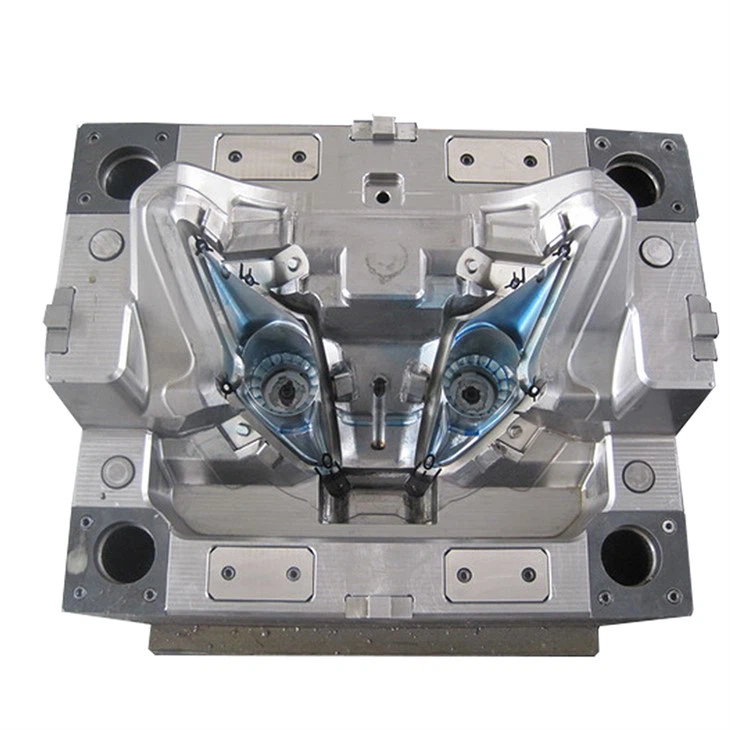
High Precision Of Car Lamp Molds
Precision car light molds produced by professional manufacturers to meet the diverse needs of customers.The mold is finely crafted and rigorous, sturdy and durable.

Injection Mold For Smooth Trolley Handle
Customized high-quality car handles for customers.Customized production by Chinese manufacturers.The product is sturdy, durable, and has a smooth color.

Hot Sales Injection Molded Sports Wheels Moulding
Sports injection molding equipment wheels professionally produced by Chinese manufacturers, sturdy, durable, smooth surface, and clear texture.

Black Smooth Delicate Fan Ring Circle
The surface of the fan ring of this product is smooth and bright in color, with good tactile quality and durability. It can improve the efficiency and performance of the product. Utilize new technologies to focus on serving customers.

Technological Innovation Car Steering Wheel
Rootsino car steering wheel is made using injection molding technology, which has the characteristics of wear resistance, strong grip comfort, high quality, and short cycle. Exclusive product creation based on customer preferences
What is Auto Die Cast
One way in which manufacturers are achieving this goal is by using die castings. Automotive die casting uses a metal molding process to produce parts from molten metal (die). They then cool the metal and solidify it into parts such as engine blocks or gearboxes machined into shape.
Die casting is a method of metal fabrication in which the manufacturers press a piece of molten metal into a mold designed to produce the desired shape. Die casting uses two main components: a die and a cavity. The die is made from steel, aluminum, or other alloy and has a series of holes and channels machined into it to form the object that will be cast.
Benefits of Auto Die Cast
Manufacture of Lightweight Components
Manufacturing lightweight components are one of the most important reasons for automotive die casting. The use of die casting in manufacturing lightweight components has made it possible to reduce the weight of these components, which means that they can function in various applications such as cars and other vehicles.
Increased Automation and Flexibility
Manufacturers can produce die castings in large quantities, making them ideal for the mass production of vehicles. In addition to standard vehicle models, die castings are used to create components such as wheels, chassis, suspension systems, and body panels. These automotive die casting components can function in multiple vehicles or be sold as spare parts if their production runs exceed a manufacturer's needs for its inventory.
Enhanced Productivity
Die castings are more efficient than traditional manufacturing methods because they require less labor input per unit of product produced than those processes do. For example, one die casting machine can produce four times as many wheel hubs as another machine with the same number of operators working on it at any given time.
Multiple finishing techniques
Automotive parts of smooth and textured surfaces can be created with die casting. The parts can be quickly finished or plated with minimum surface penetration.
Automotive parts have different parts which could require different types of lightweight metals. The variety of die casting to work on various metals makes it a prime choice for machining these automotive parts. We've highlighted examples of the metals suitable for the process below:
Zinc
Zinc is the most common metal alloy used in die casting. In addition to its high strength and good corrosion resistance, zinc provides a good surface finish. Machinists use zinc to make dies that are suitable for use on many different types of molding machines.
Aluminum
Aluminum is another commonly used metal alloy for die casting. Alumina (aluminum oxide) is one of the major components of aluminum. It can serve as an additive to other metals to make them more durable or stronger. Aluminum alloys are common raw materials in the production of dies because they have excellent heat transfer properties and provide an excellent surface finish.
Magnesium
Magnesium is another commonly used metal for die casting. It has excellent strength characteristics and is an additive to other metals to create stronger parts. Alloys containing magnesium are also often used in producing dies because they have good thermal conductivity properties. This makes them ideal for use with high-temperature tools that require rapid cooling after completing machining operations.
The Die Casting Process Explained
There are two types of die casting processes; namely, the hot and cold die casting processes. Apart from the apparent temperature difference, these two processes also differ in their setup and operating pressure. We've explained each process in detail below:
Hot Die Casting
Hot die casting is another name for the hot chamber die casting method. The furnaces integrated inside the gooseneck machines used in this technique heat the metal till it melts. A hydraulically powered piston uses the nozzle and gooseneck to push the molten metal from the furnace into the die chamber. The molten metal is then kept in the die cavity under pressure until it solidifies.
There is an intrinsic melting point to this kind of die casting. As a result, it works better with metals with lower melting points. Aluminum is inappropriate for this process because of its high melting point of 1,220 degrees Fahrenheit. On the other hand, zinc and magnesium are suitable for this process because of their comparatively low melting points.
Cold Die Casting
The machinist pours the molten metal into the injection cylinder's shot sleeve during this procedure. After pouring, a hydraulic plunger pushes molten metal into the mold cavity without heating the sleeve. This technique uses pressure ranging from 30 MPa to 150 MPa. The method is known as "cold chamber die casting" since heat is not used. Aluminum alloys with high melting points work well using this method.
Automotive die casting components produced by cold chamber die casting have outstanding dimensional accuracy. Because the increased pressure, it also results in denser metal castings and automobile parts with greater strength. The procedure is simple to complete and costs less to maintain.
Application of Auto Die Cast


Manufacture of Lightweight Components
The automotive industry now has more stringent fuel economy standards. There is growing pressure to create more efficient vehicles. Therefore, automotive manufacturers employ aluminum die-casting to achieve this goal.
Aluminum is a lightweight metal with an excellent strength-to-weight ratio
As a result, it is the leading metal used for casting engine parts and wheels. Therefore, manufacturers now make lighter and safer vehicles by ensuring the quality of external and internal components.
Increased Automation and Flexibility
The popularity of automotive die casting continues to increase due to the growing use of advanced technology. Automation of the production process makes die casting more effective and productive, ensuring the creation of higher numbers of automotive die cast components.
Increased Sustainability of Components
Die casting for automotive parts also ensures the manufacture of eco-friendly and sustainable vehicle parts. Consequently, we can be sure of auto parts casting without causing damage to the environment. In addition, the ability to recycle the materials used for these components makes them even more valuable. For example, it is possible to recycle reclaimed aluminum indefinitely.
Steps of Auto Die Cast Process
The first step in auto die castis clamping. However, before then, clean the die to remove any impurities and lubricate the die for better injection and removal of the solidified product. After cleaning and lubrication, clamp and close the die with high pressure.
Melt the metal you want to inject and pour it into the shot chamber. The procedure depends on the process you are using. For example, the shot chamber is cold in the cold chamber die casting, while it is hot in the hot chamber die casting. After that, inject the metal into the die under high pressure generated by a hydraulic system.
While clamped, allow the metal to cool for solidification. The solidified material will have a shape similar to the design of the mold.
After unclamping the die mold, an ejection mechanism will push the solid casting out of the die. Ensure proper solidification before ejecting the final product.
This is the final step, and it involves the removal of the excess metal in the sprue and runner found on the finished product. Trimming is achievable using a trim die, saw, or other procedures. The removed metal parts are recyclable and reusable in the process.
Components of Auto Die Cast
Engine Blocks
The heart of any vehicle, the engine block, is often manufactured using die casting. This is primarily due to the process's ability to create intricate and precisely structured engine parts.
Transmission Housings
Die casting is important for the smooth shifting of gears. Transmission housings, which require exceptional durability and precision, are frequently produced using this method.
Brake Components
Your road safety depends on reliable braking systems. Many brake components, such as calipers and master cylinder housings, are die-cast to ensure consistent quality.
Wheel Hub Assemblies
Die casting creates robust wheel hub assemblies, essential for supporting the vehicle's weight and ensuring smooth rides.
Intake Manifolds
These components, responsible for distributing air and fuel to the engine, are often crafted through die casting to maintain the necessary precision for optimal engine performance.
Oil Pans
Die casting offers an efficient way to produce oil pans, which are crucial in lubricating the engine and maintaining its temperature.
Suspension Components
Die casting provides strength and structural integrity for Various suspension parts, including control arms and steering knuckles.
Heat Sinks
Modern vehicles are equipped with a plethora of electronic components. Die casting helps manufacture efficient heat sinks, ensuring these components remain calm and functional.
How to Maintain Auto Die Cast
One important thing that you need to know is that die-cast model metal cars are investments that need to be taken care of and attended to; they are not simply toys as one would imagine. conserve and preserve them by all means. Holden Legend Store cars are reliable and sturdy, but maintenance could go a long way in ensuring that you keep these treasures safe and intact for many decades to come.
You can make sure that your collection continues to provide you delight and pride for many years to come by adhering to these principles. Keep in mind that caring for your die-cast models is about respecting the artistry and history they represent, not merely keeping them looking nice. Thus, take care of them, keep them clean, protect them from damage, and show them off with pride.
Some of the key challenges to the preservation and conservation of diecast model cars might be reduced by heat, humidity, and other factors. To preserve your collection of model cars, appropriate storage and display boxes are essential. Make sure the space where you store your models is dry and cold. This will protect the paint work against deterioration, warping, and melting. Roomy storage is also essential. Allowing enough space between each model vehicle helps avoid bumps and scratches that might damage the model's exterior.
video
Company Certificate


